
Electrical Stimulation Therapy
Electrical stimulation therapy uses mild current delivered through pads on the skin to relieve pain, activate muscles and help you move better. Joint Effort Physical Therapy offers e-stim physical therapy in Hot Springs, Arkansas, with the setting chosen for your condition and adjusted to what you can tolerate.
The kinds of electrical current we use
Electrical stimulation has several modes, each sending current to your nerves in a different way. Your therapist picks the one that suits your condition.
TENS
A TENS unit uses transcutaneous electrical nerve stimulation to reduce the feeling of pain.
Neuromuscular electrical stimulation
NMES, or electrical muscle stimulation, makes a muscle contract to strengthen it or keep it active. It is used after an injury or surgery or after a limb has been immobilized.
Other modes
Interferential, pre-modulated, Russian and bi-phasic currents are also on the list for nerve stimulation therapy, chosen by condition and severity.
Pain and swelling
Stimulating sensory nerve fibers can lower the sense of pain. It may also help reduce swelling and muscle spasm and improve range of motion.
How a session goes
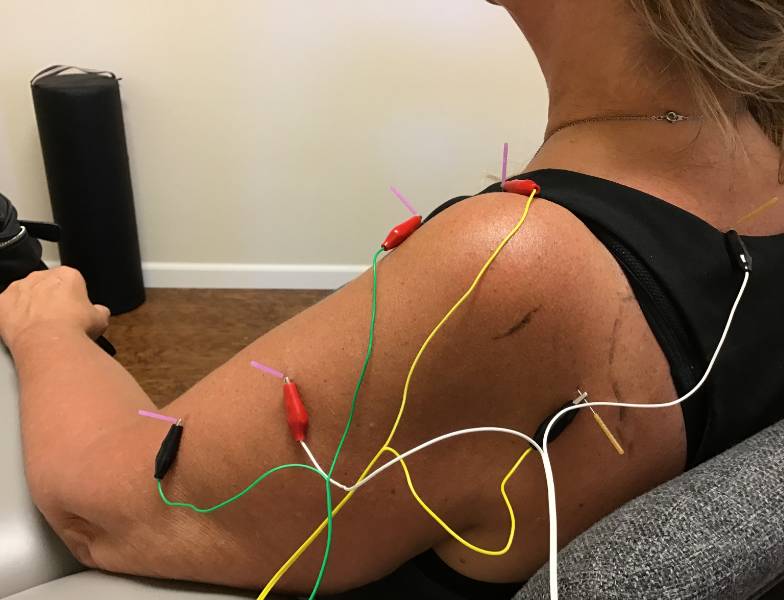
Your skin is cleaned, self-adhesive electrodes are placed around the area, and wires connect them to the unit. You sit or lie in a comfortable position, and your therapist guides you through each step.
Expect a tingling, prickly or pins and needles sensation, or a muscle contraction. Intensity is adjusted to your tolerance, and it should never be painful. Strengthening currents can feel a bit uncomfortable.
Where e-stim fits
Electrical stimulation is used for pain, muscle activation and retraining movement.
Injuries
Repetitive stress injuries, ligament sprains, muscle strains, and sports or auto accident injuries. See sports injuries, knee pain and back pain.
After surgery or immobilization
To keep muscles working when they cannot yet do the full job. See post-surgical rehab and blood flow restriction training.
Nerve and long-term problems
Used for neurological conditions such as stroke, for peripheral neuropathy and for chronic pain. Your therapist builds a wider plan.
Who should not have electrical stimulation
It is not for everyone. Tell your therapist before your first treatment if you have:
- A pacemaker or other implanted device
- Deep vein thrombosis
- Pregnancy (not over the abdomen)
- Cancer in the area, or concerns over the front of the neck
- Impaired thinking or cognition
If you use a TENS unit at home, ask your therapist whether it suits you. We can also pair e-stim with laser therapy or neuromuscular re-education.
Cost and getting started
Rob Jordan, PT at our Hot Springs clinic explains what your plan includes. Call us to ask how e-stim is billed. Joint Effort Physical Therapy accepts most major commercial and private insurances, and the insurance page lists the plans it does not take. Self-pay is $85 per visit.
Not sure whether your plan needs a referral? Call us. As a courtesy, we verify your health benefits before you arrive.
Electrical stimulation care in Hot Springs, Arkansas
Joint Effort Physical Therapy treats Electrical stimulation at our Hot Springs clinic, 1880 Airport Rd., Suite C.
Not sure whether your plan needs a referral? Call us. As a courtesy, we verify your health benefits before you arrive.
Meet the people who treat you on our team page.